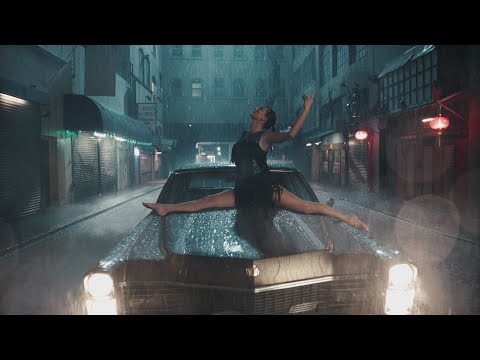
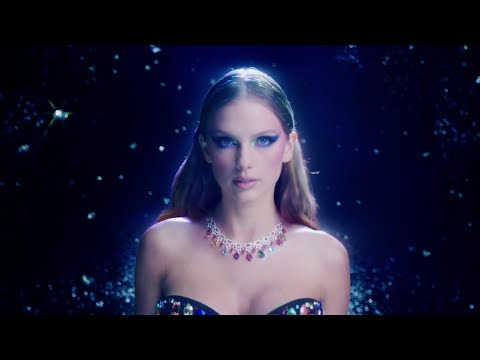
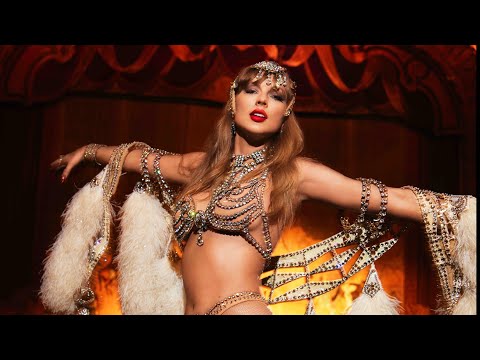
Taylor Swift’s “Shake It Off” is a bright, defiant pop anthem that turns public criticism into a mass-participation dance record. As an official music-video concept, it belongs to the early 1989 era and remains one of the clearest examples of how pop can be both commercially massive and culturally controversial.
Professional Description
“Taylor Swift – Shake It Off (Official Music Video) | Iconic Dance Hit” should be described as a high-energy pop visual built around movement, self-confidence, and refusal to be defined by outside judgment
. The song’s hook is simple, memorable, and extremely repeatable, which helped make it one of Swift’s most recognizable mainstream records
. The video uses exaggerated dance styles, costume shifts, and comic performance choices to reinforce the message that public noise should not control personal identity
.
A strong American-English description should also note that the track later received renewed official visibility through 1989 (Taylor’s Version), which kept the song active in Swift’s modern catalog strategy and streaming ecosystem. That matters because it shows the song is not just a throwback hit; it is still part of a living commercial and cultural platform.
Positive Impact
On the positive side, “Shake It Off” is a textbook example of pop as resilience messaging. Its value lies in its accessibility: the song gives listeners a simple emotional tool for dealing with pressure, social judgment, and everyday negativity. In that sense, it has real social utility because music that encourages confidence and emotional release can be helpful across school, workplace, and youth settings.
The video also contributed to dance visibility in mainstream pop. By placing movement at the center of the concept, it helped turn choreography into a participatory cultural language rather than a niche performance skill. That has value for dancers, choreographers, creative directors, editors, costume designers, and digital creators, all of whom benefit when a pop release generates long-term reuse and imitation.
Critical View
A serious negative reading is that the video was widely criticized for cultural insensitivity and appropriation concerns, especially in how it staged Black dance forms and hip-hop signifiers for a largely white pop audience. That criticism is not minor; it goes directly to the ethics of representation in mainstream entertainment. Even years later, the video is often used as an example of how a powerful artist can borrow aesthetics without fully accounting for their social meaning.
Another criticism is that the song’s very strength can be a weakness: its simplicity makes it easy to consume but less complex than Swift’s more layered work. In some scenarios, that makes it feel more like a branding statement than a deeply original artistic risk. The result is a piece that can be both genuinely fun and somewhat strategically engineered for mass approval.
Industry Contribution
Economically, the larger Taylor Swift ecosystem has demonstrated major spillover effects across tourism, hospitality, retail, media, and live-event labor. While those reports focus on the Eras Tour rather than this specific song, they are still relevant to understanding the scale of Swift’s commercial reach and the kind of labor ecosystems her releases help sustain. In practice, songs like “Shake It Off” remain valuable because they anchor catalog demand, fan engagement, and platform activity over long periods.
That contribution is real, but it should be measured carefully. A hit record can support jobs and local spending, yet it does not automatically create broad social progress unless that success is paired with fair labor conditions, inclusion, and long-term community benefit. So the song’s real-world contribution is strongest when viewed as part of a wider creative economy rather than as a standalone social good.
Social Meaning
In the best-case scenario, “Shake It Off” gives people a shared language for emotional self-protection and public resilience. It works especially well in environments where people are judged constantly, such as school, social media, and highly visible workplaces. That makes it more than a dance hit; it becomes a behavioral cue for confidence and detachment from negativity.
In the worst-case scenario, the video’s imagery can reinforce unequal power dynamics by using marginalized culture as visual flavor while a mainstream star absorbs the commercial reward. That is why a critical description should remain balanced: the song is undeniably effective, but its visual legacy is inseparable from the debates it triggered. Both truths matter if the goal is a high-EEAT, research-driven description.
Source Grounding
The official and archival sources confirm the song’s place in Swift’s 1989 era and the later Taylor’s Version catalog rollout. Contemporary reporting from major outlets documented the backlash over the video’s racial imagery and cultural appropriation concerns. Broader 2026 coverage of Swift’s cultural dominance helps explain why older catalog hits like this continue to matter in the present music economy.