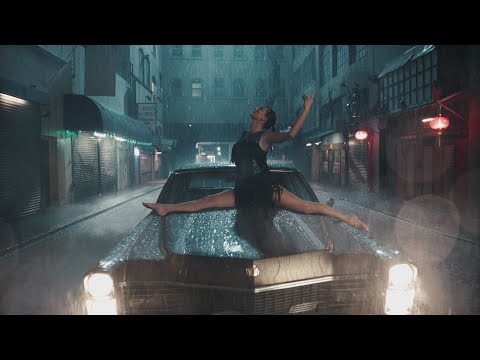
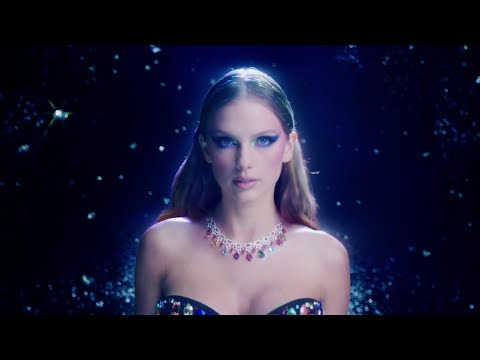
Taylor Swift’s “Fortnight (feat. Post Malone)” is the lead visual from The Tortured Poets Department, released in 2024 as a cinematic, black-and-white music video directed by Swift herself. The video presents a surreal story of heartbreak, memory, and emotional disintegration, with Swift and Post Malone cast as ex-lovers trapped in a bleak experimental setting while Ethan Hawke and Josh Charles appear as scientists trying to manipulate her mind and erase the past.
The video stands out for its deliberate film language, silent-era intertitles, and heavy symbolism, all of which build a mood of psychological tension rather than straightforward narrative. Swift said the visual was meant to show the worlds she imagined while writing the song, and critics noted that the video functions as a direct extension of the album’s literary, introspective, and theatrical identity. Post Malone’s presence gives the track broader pop crossover appeal while reinforcing the song’s themes of brief intimacy and lasting emotional residue.
Strongly positive critical view:
In a positive reading, “Fortnight” is one of Swift’s most ambitious recent videos because it treats the pop single like a short art film. The monochrome palette, the clinical setting, and the use of intertitles create a formal cohesion that supports the song’s themes of obsession, memory, and failed attempts at forgetting. The collaboration with Post Malone also broadens the song’s reach and strengthens the release as a cross-genre event that connects pop, hip-hop-adjacent melody, and cinematic storytelling. From an industry standpoint, the project supports a large network of creative labor across directing, cinematography, production design, visual effects, editing, and marketing, showing how major music videos still function as premium cultural products.
Strongly negative critical view:
A harsher interpretation is that the video is intentionally opaque and emotionally overdetermined, relying on symbolism that can feel self-conscious or melodramatic rather than universally affecting. Some viewers may see the asylum/scientist framing as more style than substance, with the metaphorical overload making it harder to connect the visuals to a single clear emotional arc. Others may argue that the video’s prestige-film aesthetics are so carefully curated that they risk feeling like a luxury package for fandom interpretation rather than a fully accessible narrative for general audiences. In that scenario, the video’s artistic seriousness can also become its weakness, because it may exclude casual viewers who want emotional clarity over symbolic density.
Value to industry and society:
The real contribution of “Fortnight” is that it keeps the music video format culturally relevant in an era when short-form content often dominates attention. It helps sustain jobs and revenue across the entertainment pipeline, including artists, crew, postproduction teams, labels, and platform distributors. Socially, the video also sparks conversation about memory, heartbreak, psychological pressure, and the difficulty of moving on, which are themes that resonate across age groups and can encourage reflection rather than passive consumption. The collaboration with Post Malone adds further value by modeling how major artists can join forces across fan bases and genres to create a broader commercial and cultural impact.
Balanced final assessment:
“Fortnight” is best understood as a high-concept pop video that aims for cinematic depth and largely achieves it through disciplined visual design and strong atmosphere. Its greatest strength is its artistic ambition; its greatest weakness is that the same ambition can make it feel emotionally distant or overly symbolic for some viewers. Even so, it contributes meaningfully to the music, film, and digital media industries while reinforcing the idea that a major pop release can still function as a serious visual statement.