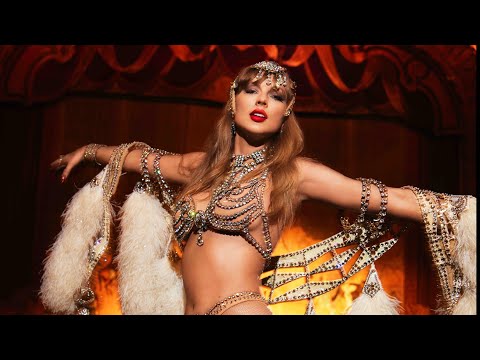
Taylor Swift’s “Bad Blood” featuring Kendrick Lamar is a high-energy pop-rap statement that turns betrayal, rivalry, and reinvention into a cinematic action piece. For a professional American-English description, it should be framed as one of the most visually ambitious collaborations of the 1989 era, with a polished blockbuster feel and a strong emphasis on empowerment through confrontation.
“Taylor Swift – Bad Blood ft. Kendrick Lamar (Official Video) | Drama Anthem” is best described as a sleek, fast-cut music video that transforms emotional conflict into a comic-book-style spectacle
. The video uses an ensemble cast, stylized action sequences, and futuristic visual design to give the song a larger-than-life identity that goes beyond a standard pop release
. Kendrick Lamar’s added verses expand the track’s intensity, giving the remix a cross-genre energy that helped it stand out as one of the era’s most discussed collaborations
.
A strong updated description should also recognize that the song remains part of Swift’s long-term catalog footprint and still gets analyzed in fan, media, and reaction spaces years after release. That ongoing attention is important because it shows the video has durable cultural value, not just short-term viral appeal.
Positive Value
On the positive side, “Bad Blood” is a powerful example of how pop can merge spectacle with narrative identity. The video gave Taylor Swift a chance to convert a public conflict into a stylized visual world, and that kind of creative control is valuable in an industry where image often gets managed by other people. It also showed that a mainstream pop single could support large-scale production, strong casting, and cross-genre collaboration without losing commercial momentum.
The collaboration with Kendrick Lamar is especially important because it shows the commercial and artistic reach of both artists. Pop and hip-hop do not always blend smoothly in mainstream releases, but this one proved that a joint record could attract attention from multiple audiences at once. That has real value for writers, producers, labels, editors, directors, stylists, and promotional teams who depend on ambitious, high-concept releases to drive jobs and visibility.
Critical View
A serious negative reading is that the video is so crowded and stylized that it can feel more like a marketing event than a fully coherent story. The huge cast, rapid editing, and action-movie framing make it memorable, but they also risk overshadowing the emotional core of the song. For some viewers, the result is impressive but too busy, with style sometimes overpowering substance.
There is also a fair criticism that “Bad Blood” leans heavily on celebrity imagery and cool-factor aesthetics rather than deeper emotional complexity. It turns conflict into an expensive spectacle, which makes it entertaining but also somewhat superficial as a piece of storytelling. In that sense, the video’s success is tied as much to star power and production scale as to artistic depth.
Industry Contribution
The real industry value of “Bad Blood” is its demonstration of how a music video can function like a premium entertainment product. That matters because high-budget music videos create work across multiple sectors: film crews, visual-effects teams, stylists, makeup artists, location staff, editors, and digital distribution teams. It also helped reinforce the commercial logic of event-style music releases, where the video itself becomes part of the promotional story.
The collaboration also has long-term economic relevance because Swift’s catalog continues to generate visibility and discussion, while Kendrick Lamar’s participation added another layer of prestige and audience reach. In practical terms, the project supports recurring labor across music media, reaction content, editorial analysis, and platform engagement. That makes it more than a pop artifact; it is part of a broader creative economy.
Social Meaning
In the best scenario, “Bad Blood” can be read as a symbolic rejection of betrayal and a celebration of rebuilding strength after conflict. That message resonates in workplaces, friendships, and relationships where trust has broken down, because it gives listeners a dramatic but familiar way to process resentment and resilience. The video’s empowered tone can be motivating for audiences who want music that feels decisive and cathartic.
In the worst scenario, the song can encourage a simplistic view of conflict where everything is reduced to sides, loyalty, and aesthetic revenge. That framing is entertaining, but it does not encourage much nuance or reconciliation. Still, its cultural value remains high because it continues to spark debate about representation, collaboration, and the way pop music packages tension for mass consumption.
Source Grounding
The official-era references and archival coverage confirm the song’s place in the 1989 cycle and its featured collaboration with Kendrick Lamar. Contemporary reviews and later analysis describe the video as a major spectacle with strong casting and a blockbuster production approach. More recent reaction and analysis content shows that the video still attracts attention and remains part of Swift’s active cultural footprint