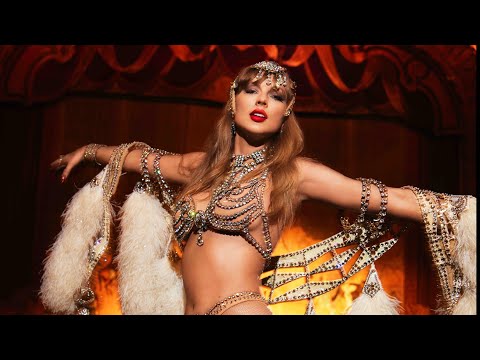
Taylor Swift’s “Wildest Dreams” is a cinematic pop ballad that turns nostalgia, longing, and fleeting romance into a visually lush, emotionally distant dreamscape. A strong American-English description should present it as one of Swift’s most atmospheric videos: elegant, tragic, and intentionally shaped like a classic movie romance, while also carrying serious controversy about representation and historical imagery.
Professional Description
“Taylor Swift – Wildest Dreams (Official Music Video) | Cinematic Hit” should be described as a glossy, film-influenced visual that frames love as temporary, beautiful, and already disappearing while it is still happening
. The video follows a vintage movie-production concept, with Swift playing a 1950s-era star surrounded by sweeping landscapes, old-Hollywood styling, and a romance that feels doomed from the start
. That structure gives the song a timeless, melancholic quality that made it one of the standout cinematic releases from the 1989 era
.
A polished description should also acknowledge that the video was visually ambitious and professionally produced, with strong direction, costume, and location design that helped make it feel like a full-scale short film rather than a standard music clip. That is part of its lasting appeal: it is emotionally simple on the surface, but visually rich and highly memorable.
Positive Value
On the positive side, “Wildest Dreams” is an effective example of how pop music can use nostalgia as a storytelling tool. It captures the feeling of wanting a moment to survive in memory even when you already know it will not last, which is a universal emotional theme. That kind of emotional clarity gives the song strong value in music, film, fashion, and visual culture.
The video also contributed to jobs and creative work across multiple sectors. Large-scale productions like this involve directors, cinematographers, editors, stylists, set designers, location teams, visual-effects workers, and promotional staff. It helped reinforce the idea that music videos can function as premium visual products, not just promotional content, which supports the broader creative economy and the work of many people behind the scenes.
Critical View
A serious negative reading is that the video drew backlash for romanticizing colonial-era Africa and presenting the setting through a highly filtered, almost empty nostalgic lens. Critics argued that the video used Africa as aesthetic scenery while centering white characters and excluding the people and histories actually tied to the location. That criticism matters because it shows how visually beautiful work can still carry troubling political and racial implications.
Another criticism is that the video’s old-Hollywood fantasy depends heavily on selective memory. It presents the past as glamorous while smoothing over the violence, exploitation, and unequal power structures tied to the eras it references. For some viewers, that makes the video emotionally effective but ethically shaky.
Industry Contribution
The real contribution of “Wildest Dreams” to the industry is that it helped strengthen the model of the music video as an event piece. That matters because premium visuals create demand across filmmaking, styling, location production, and digital commentary. In practical terms, it keeps labor flowing through creative industries that depend on high-visibility projects.
It also contributed to the ongoing commercial power of Taylor Swift’s catalog. Songs like this remain relevant because they continue to circulate through streaming, reaction content, analysis, and fandom conversation long after release. That long-tail relevance supports revenue and employment across media publishing, platform ecosystems, and music rights management.
Social Meaning
In the best scenario, “Wildest Dreams” gives listeners a language for transience, memory, and emotional impermanence. It can help people process the idea that a relationship can be meaningful even if it does not last. That is socially useful because it validates emotional complexity without forcing a clean resolution.
In the worst scenario, the video becomes a cautionary example of how nostalgia can erase context. It reminds audiences that beautiful imagery is not the same thing as responsible representation. Still, the fact that the video continues to be discussed years later shows its lasting cultural weight and its ability to generate debate about art, history, and ethics.
Source Grounding
The available official and archival references confirm the song’s 1989 era identity and its music-video concept. Major reporting documented the backlash over racial and colonial imagery, while later commentary continued to frame the video as a case study in nostalgia and representation. That combination is what gives the piece its lasting relevance: it is both aesthetically strong and critically complicated.